
DIY Plumbing Repairs: What You Need to Know
Have you ever faced a dripping faucet or a clogged drain and wondered if you could tackle the problem yourself? With a bit of know-how and the right tools, many common plumbing issues can be resolved without calling in a professional. Here’s a guide to help you get started on basic plumbing repairs.
1. Leaky Faucets
A leaky faucet is more than just an annoyance—it can waste a significant amount of water and increase your utility bills. Here’s a quick fix:
- Turn Off the Water Supply: Look under the sink for the shutoff valves and turn them clockwise. If you can’t find them, turn off the main water supply.
- Disassemble the Faucet: Use a wrench to remove the handle and the packing nut. Then, take out the cartridge or the valve assembly.
- Inspect and Replace Parts: Check for worn-out washers, O-rings, or cartridge components. Take these parts to a hardware store to find exact replacements.
- Reassemble and Test: Put everything back together, turn the water supply back on, and test for leaks.
2. Clogged Drains
A slow or clogged drain can be frustrating. Here’s how to handle it:
- Plunge Away: For sinks and toilets, use a plunger to dislodge the clog. Make sure there’s enough water in the basin to cover the plunger’s cup.
- Use a Drain Snake: For stubborn clogs, a drain snake or auger can reach deeper blockages. Insert the snake into the drain and turn it clockwise to break up or retrieve the clog.
- Chemical Cleaners: As a last resort, you can use chemical drain cleaners, but be cautious as they can damage pipes if used too frequently, leading to costly repairs.
3. Running Toilets
A running toilet can be due to a faulty flapper, a problem with the fill valve, or an issue with the float. To fix it:
- Check the Flapper: Open the tank and inspect the flapper. If it’s worn or not sealing properly, replace it.
- Adjust the Float: The float controls the water level in the tank. If it’s too high or too low, adjust the float arm or the screw mechanism to ensure proper water levels.
- Inspect the Fill Valve: If adjusting the float doesn’t work, the fill valve may need to be replaced. Turn off the water supply, remove the old valve, and install a new one.
4. Burst Pipes
A burst pipe can cause serious damage if not addressed quickly. If you find a burst pipe:
- Turn Off the Water Supply: Immediately shut off the main water supply to prevent further flooding.
- Drain the System: Open faucets throughout the house to drain remaining water.
- Repair or Replace the Pipe: For small cracks, you might use pipe repair tape, a pipe clamp, or other suitable sealing materials. For larger damage, you may need to cut out the damaged section and replace it with a new piece of pipe. Soldering may be required for copper pipes.
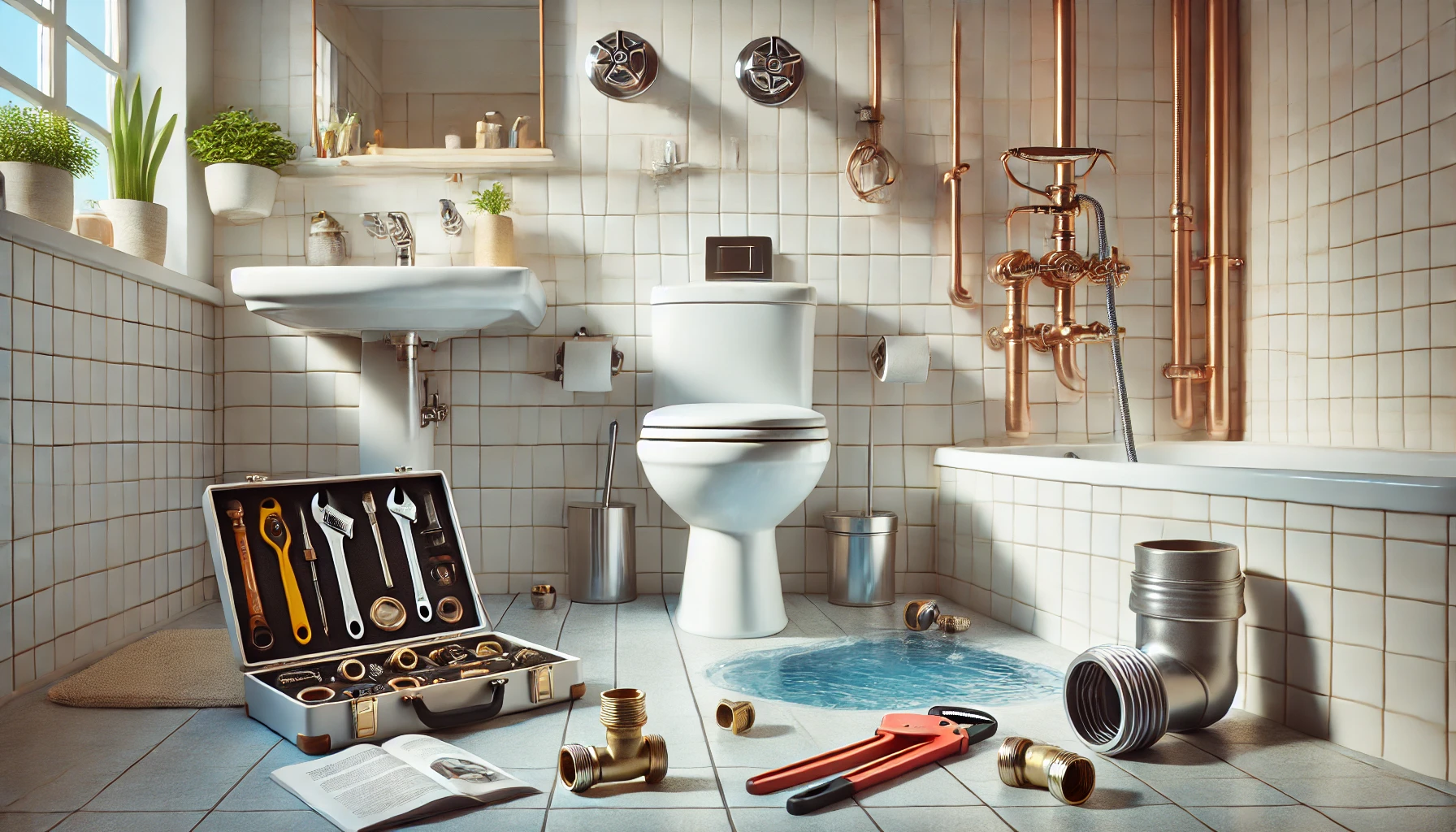
Tools You Might Need:
- Adjustable wrench
- Pipe wrench
- Plunger
- Drain snake
- Screwdrivers
- Plumber’s tape
- Pipe repair clamps or tape
When to Call a Professional
While you can handle many plumbing issues with DIY efforts, it’s important to recognize when certain problems are beyond your expertise and require professional assistance. For major leaks, significant clogs, or extensive pipe replacements, it’s recommended to contact a licensed plumber for assistance.
By mastering these basic plumbing repairs, you can effectively address minor issues and avoid expensive repair bills. Happy fixing! You’ve got this!